Why Naomi Osaka's Black Tennis Party Caused a Controversy That Reveals Everything
Naomi Osaka threw a dinner party for Black tennis players before the 2026 French Open and people lost their minds. Here's the history of race in tennis, the double standard Osaka has faced, and why that party was not controversial — it was necessary.
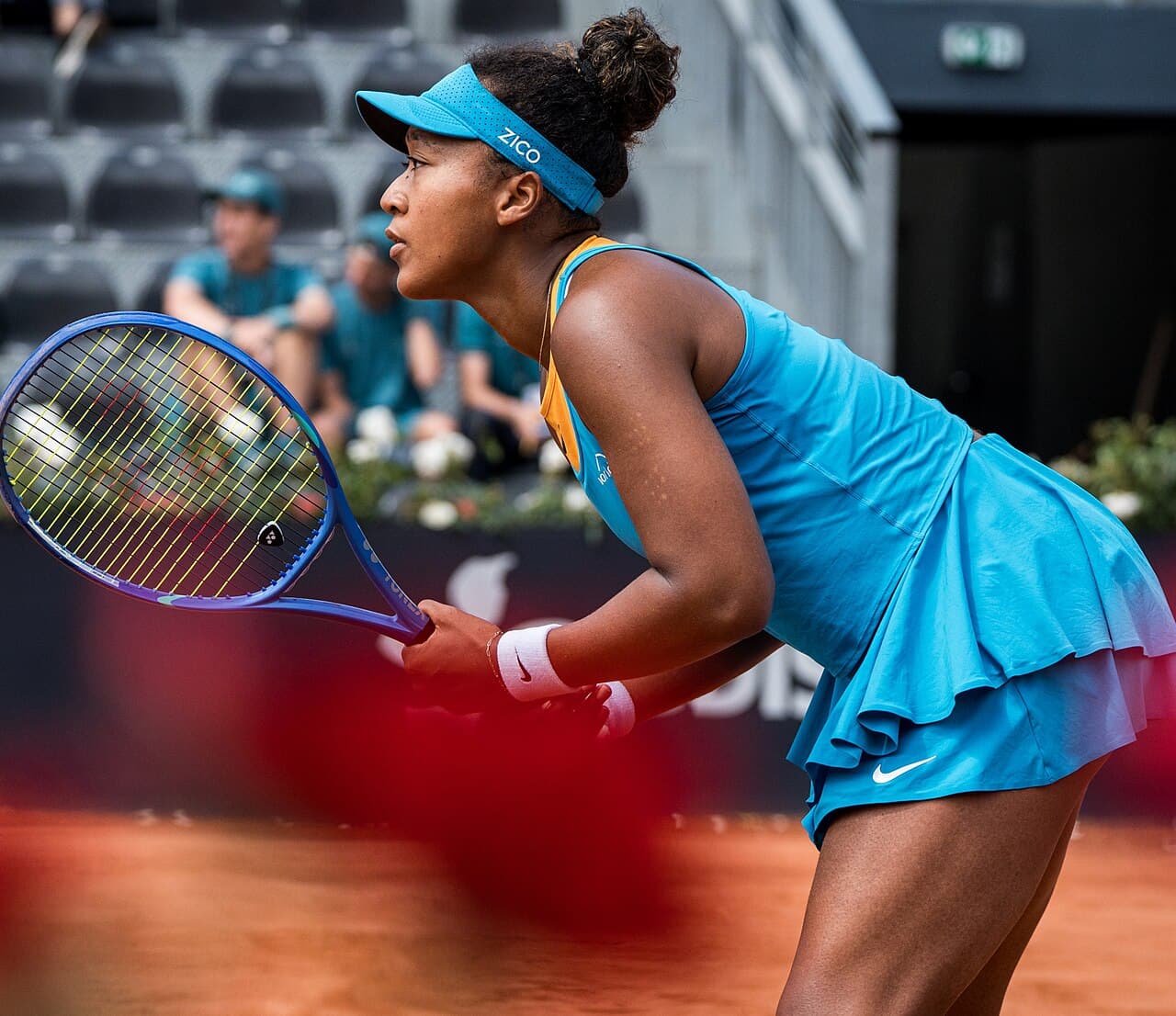
On the night before the 2026 French Open main draw began at Roland Garros, Naomi Osaka did something radical. She threw a dinner party. She invited Black tennis players. They ate, laughed, shared stories, and took photos. And then the internet exploded — not in celebration, but in outrage.
That outrage tells you everything you need to know. Not about Naomi Osaka. About the institution of tennis, and about how deeply uncomfortable some people get when Black people choose to take up space together, on their own terms, in a sport that was never designed to include them.
This is the breakdown behind the party, the backlash, and why both matter.
Tennis Has Always Been a Racially Exclusive Institution — The History Nobody Wants to Acknowledge
Before we talk about what Naomi Osaka did, we need to talk about what tennis has always been.
Tennis is one of the most racially homogeneous professional sports in the world. The country clubs, the all-white dress codes, the Grand Slam traditions — all of it has historically signaled loudly and clearly that this sport was not built for Black people.
Althea Gibson broke the color barrier in tennis in 1956, becoming the first Black player to compete at Wimbledon. She won Wimbledon in 1957 and 1958. She was the best player in the world — and the tennis establishment barely tolerated her. Imagine being Althea in those years: walking out onto those courts without a single familiar face in the crowd, without anyone patting her on the back or rooting for her in a way that felt like home.
Then came Arthur Ashe, the first Black man to win the US Open in 1968. And even at the height of his fame, even after winning three Grand Slam titles, Ashe told Sports Illustrated something that should stop you cold: "It's an abnormal world I live in. I don't belong anywhere. It's like I'm floating down the middle." A man who won Wimbledon felt like he didn't belong in the sport he dominated.
Then came Venus and Serena Williams — two girls from Compton who trained on public courts and went on to dismantle every assumption the tennis world had ever made about who could be great. And what did they receive in return? Decades of scrutiny about their bodies, their hair, their attitude, their father. Serena Williams, the greatest player of all time, spent the better part of three decades defending her humanity in a sport she singlehandedly elevated.
This is the pattern: Black players show up, they dominate, and the institution does everything in its power to make them feel like they don't belong.
Who Is Naomi Osaka — and Why She Was the Perfect Person to Build This Table
Naomi Osaka is half Japanese and half Haitian-American. Her father, inspired by watching Venus and Serena compete at the French Open, began training his daughters on public courts. In Japan, Osaka faced discrimination as a mixed-race child. She has said openly: "When I go to Japan, people are confused. From my name, they don't expect to see a Black girl."
She represents Japan professionally. She is also unmistakably Black. She is deeply American in her upbringing. She carries all of that into every court, every press conference, every post. And that layered, complex identity — combined with everything she has personally been through inside the institution of professional tennis — is exactly why she was the right person to build this table.
What Actually Happened: The Black Party at Roland Garros
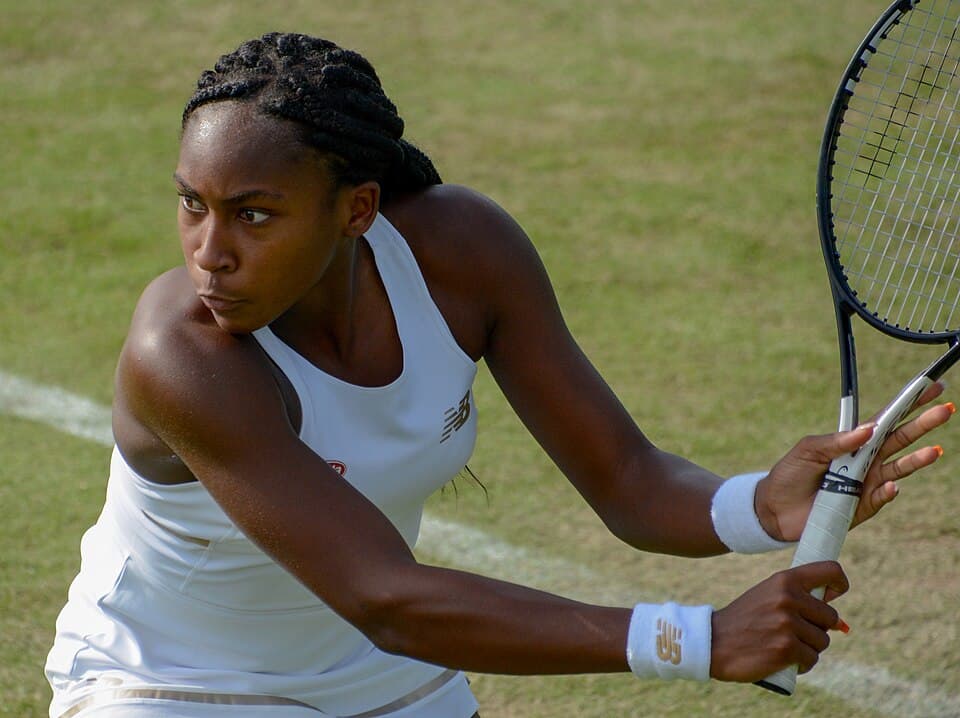
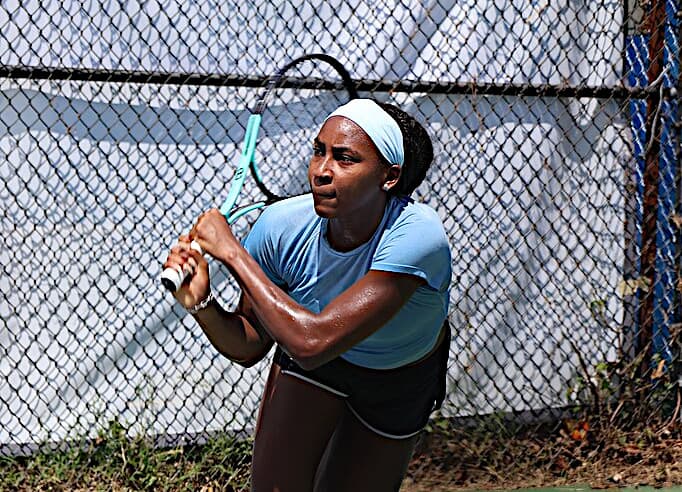
On Saturday, May 23rd, 2026, the night before the main draw of the French Open got underway, Naomi Osaka and fellow player Taylor Townsend co-hosted a dinner at Soho House in Paris. They called it the "Black Party (Roland Garros 'RG' Edition)." The guest list included Coco Gauff — the defending French Open women's champion — Gaël Monfils, Asia Muhammad, and former player turned commentator Christopher Eubanks. Everyone showed up in black outfits for a candlelit night of food, laughter, and shared stories.
Townsend captured the spirit of the evening directly: "It's important for us to come together because this sport is naturally very isolating and selfish. I feel like it's important to break that mold, support each other outside of the sport and away from the courts, and build genuine friendships that last beyond the court."
Osaka posted photos on Instagram, described the significance of the gathering, and talked about what it means to be a minority in this sport — the gratitude, the sense of brotherhood, the feeling of being in a room full of people who understood without needing an explanation.
And then, as predictably as morning traffic, the criticism came. Critics asked why other players weren't invited. People asked what would happen if someone had an all-white party. Online commenters called it exclusionary. Some media coverage framed a race-specific gathering as inherently problematic.
Not one of those critics stopped to ask the more important question: why would Black players in an elite predominantly white sport need this kind of gathering in the first place? That question didn't come up. And that silence tells you everything.
Osaka's Response — She Said It Better Than Any Commentator Could
Osaka responded publicly, both on social media and directly in her Roland Garros press conference, and she did not mince words.
On the all-white party argument, she wrote: "You know I'm seeing a little bit of 'Why can't you love everyone for all skin tones?' and 'What if someone had an all-white party?' First of all, I do love everyone for who they are no matter their race. To those who raise this question, I also want to ask this question: What bothers you so much about POC coming together?"
And then she closed with something that deserves to stand on its own: "I want to end this by saying, I grew up watching my dad get discriminated against, having the cops called on him multiple times at the tennis court. There are multiple things I will apologize for in my life, but celebrating being Black and appreciating who we are will never be something I would consider saying sorry for. Thanks. Actually, I lied. I am sorry. I'm sorry for the people who cannot comprehend in their brains that this is not about exclusion. This is a celebration about how far we have come."
Her father had the cops called on him at a tennis court. She went on to become one of the four best female players in the history of the sport. She walked back into the space that haunted her family — and she built a table there. That is not controversial. That is extraordinary.
The All-White Party Argument — Here's the Historical Answer
This argument comes up every single time Black people gather with intention, so let's address it directly — especially as it applies to tennis specifically.
The all-white party in tennis already happened. It was called tennis from roughly 1900 to 1956. It was called the All England Club before Althea Gibson forced the door open. It was the private country club circuit that Black families couldn't access when Arthur Ashe was growing up.
Context is everything. When Black people come together in affinity, it is an act of community building in direct response to a long history of exclusion. When dominant groups gather exclusively, it is the reproduction of that exclusion. These are not equivalent situations. Treating them as equivalent is not a neutral position — it is a form of historical denial.
The all-white party argument collapses the moment you introduce any history. And history is the entire point.
Coco Gauff's Wimbledon Run Was No Accident. 5 Life Lessons That Explain Exactly How She Did It.
What Naomi Osaka Has Actually Been Put Through — The Timeline That Explains Everything
You cannot understand why this party mattered without understanding the cumulative weight of what Naomi Osaka has personally endured inside this institution.
In 2021, Osaka — then the number two player in the world, a four-time Grand Slam champion, and the highest-paid female athlete on the planet — announced she would not be participating in mandatory press conferences at the French Open. She explained that media appearances caused her enormous anxiety, and disclosed that she had been suffering from depression since 2018.
The French Open's response was to fine her $15,000 and threaten to disqualify her from the tournament. Not a conversation. Not a check-in. A fine and a threat.
That same tournament, Roger Federer withdrew citing physical injury. He received an official medical exemption — no fine, no threat, no statement from all four Grand Slams warning him about his future eligibility.
A Black woman disclosed a mental health condition she had been managing privately for three years. She was fined and threatened with expulsion. A white man decided he didn't want to play anymore. He was wished well and sent home with grace.
Naomi Osaka's mental health was not treated like health. It was treated like an inconvenience.
Even in her announcement of withdrawal — vulnerable, honest, and clearly in pain — media commentators called her coddled, questioned her legitimacy, and said she wasn't tough enough for the sport. This is the same pattern we saw with Serena Williams, Simone Biles, and Gabby Douglas. Black women in elite sports are expected to perform, produce, and then shut up. When they don't, the media machine cranks up and tears them down.
Why Black Safe Spaces in Elite Sports Are Not Optional — They Are Therapeutic
There is a well-documented psychological concept behind what Osaka created at Soho House in Paris. Affinity spaces — gatherings that center shared experience for people who are minorities in a given environment — are not exclusionary. They are therapeutic. They are how you survive institutions that were designed for someone else.
When you are one of the only Black players on a predominantly white professional tour, navigating press scrutiny, racist double standards, and the cumulative weight of representing your community in a space that has historically rejected it — you need people who understand. Not people who will empathize from the outside. People who have lived the same thing.
Osaka didn't wait for the WTA to create a task force. She didn't write a think piece. She called Taylor Townsend, rented a space at Soho House, and made it happen herself. That is leadership. That is exactly what you do when the institution isn't going to build the table for you.
The People at the Table — Why This Was a Generational Moment
This was not a random group of friends. This was a community — and every person at that table represented something specific.
Coco Gauff, the defending French Open champion, is still in her early 20s and navigating the same pressures Osaka has faced. The conversation between Naomi and Coco — rivals on the court, community in life — represents an unbroken lineage from Althea Gibson to Venus and Serena to the present generation.
Gaël Monfils is a veteran of the ATP tour, a Black man who has navigated a predominantly white professional environment for two decades. He is the senior statesman at the table — someone who can tell the younger players what to watch out for, who is supportive, who isn't.
Taylor Townsend, co-host and accomplished professional, has spoken openly about her own experience with body shaming and bias in tennis. Asia Muhammad brings the doubles specialist perspective — and another face of what Black excellence looks like day to day. Christopher Eubanks, now a media figure, represents the broadening of Black experience in tennis beyond the court itself.
This was not a vibe. This was a generational moment — and the people who found it threatening are telling on themselves.
The Bottom Line: The Party Cost You Nothing. The Outrage Costs Us Everything.
What did it cost you for these tennis players to gather, eat dinner, and tell each other they are not alone? The answer is nothing. It cost you exactly nothing.
The faux outrage about this dinner is not about harm. It is about discomfort. The discomfort that Black people are getting comfortable in spaces where they have historically been unwelcome. The discomfort that they might stop shrinking. That they might start to feel like they belong.
Naomi Osaka stopped shrinking a long time ago. Her father had the cops called on him on a tennis court. She went on to win four Grand Slam titles — the 2018 and 2020 US Open, the 2019 and 2021 Australian Open. She became the first Japanese player, man or woman, to be ranked number one in the world. She took time away to have her daughter Shai. She came back. She kept showing up.
And then she threw a party and invited her people.
The lineage is unbroken. The table keeps growing. And the people who want to dismantle it are fighting a losing battle against time.
This Is the Analysis Black Women in Sports Deserve — Join the Yasmin Breakdown on Patreon
Yasmin Breakdown exists to give you the history, the sociology, and the cultural context behind the stories dominating the sports world — with Black women at the center of that conversation, always.
Support independent media that tells this story the way it deserves to be told. Join the Yasmin Breakdown on Patreon for deeper dives, extended breakdowns, and the conversations mainstream sports media won't have.
Watch the original video on YouTube and tell us in the comments — did the backlash to this party surprise you?