Coco Gauff's Wimbledon Run Was No Accident. 5 Life Lessons That Explain Exactly How She Did It.
Coco Gauff was two points from elimination at Wimbledon 2026. Then she won six straight points and changed everything. Here are the five mindset lessons behind her historic run — and why every Black girl watching needs to see them.

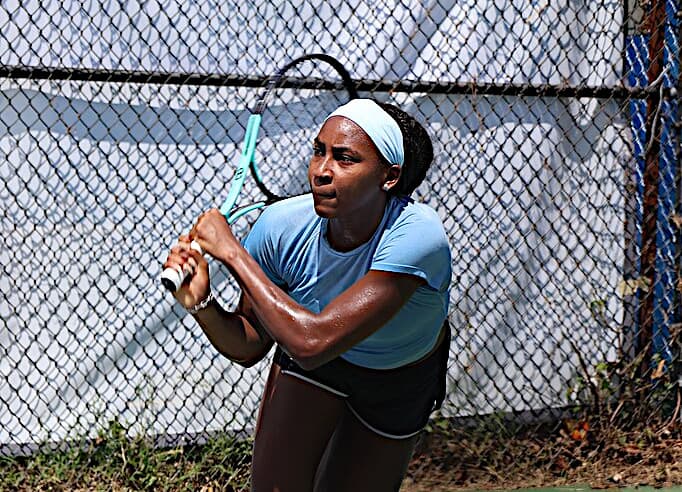
On July 1, 2026, Coco Gauff was two points away from going home. She had just dropped the second set to Argentina's Solana Sierrra, a player ranked 56th in the world. Down 7-4 in the final-set tiebreak, facing elimination at a tournament she had never advanced past the round of 16, with the entire world watching — she did something remarkable.
She won six straight points. She advanced. And then she kept going — all the way to her first-ever Wimbledon semifinal.
That comeback did not happen because of superior groundstrokes. It happened because of something that lives between the ears and inside the chest. And when you listen to how Coco Gauff actually talks — about faith, about identity, about belonging, about the women who came before her — the comeback starts to make complete sense.
Here are five lessons Coco Gauff taught us at Wimbledon 2026 that go far beyond tennis.
The Comeback — What Actually Happened on Court
Before the lessons, let's establish the stakes.
Gauff was down 7-4 in the deciding-set tiebreak against Solana Sierra in the second round at Wimbledon on July 1, 2026. Sierra had been playing aggressive, high-quality tennis. She had nearly doubled Gauff's groundstroke winner total. She was serving for the set. She had the momentum.
And then Gauff won six consecutive points to close out a 6-3, 3-6, 7-6 victory — the first time in her career she had won a deciding-set tiebreak at a Grand Slam.
A critical moment came at 7-7 when Gauff hit a one-handed backhand passing shot — a wing-and-a-prayer ball she later admitted she couldn't repeat if she tried. She said she was "just reminding myself, and my coach always tells me, 'Remember who you are.'"
Since that second-round escape, Gauff has gone on to reach her first-ever Wimbledon semifinal, defeating fourth-seeded compatriot Jessica Pegula in the quarterfinals — coming from a set down for the second straight round. This is not a fluke. This is a pattern. And the pattern starts in the mind.
Lesson 1: Be Inspired By Others Who Look Like You
In a pre-tournament press conference at Wimbledon, Gauff was asked about Venus and Serena Williams as inspirations. Her answer was direct: "I play the sport because of them. I believe I can do things because of them. And I still look up to them a lot. Even when I play them, I'm still admiring."
That last sentence is worth sitting with. Even in competition — even when Gauff was on the other side of the net from one of her heroes — she never stopped admiring. She held both the competitor and the admirer simultaneously. And that combination gave her something essential: a visual proof of what was possible.
For Black girls who are often the target of criticism and doubt from a very young age, having someone who looks like you — who has succeeded in spaces that were not designed for you — is not a small thing. It is a lifeline. It is the difference between seeing a future for yourself and being unable to picture one.
Althea Gibson opened the door. Venus and Serena dismantled every assumption about who could walk through it. Coco Gauff walked through it — and now she is the visual proof for the next generation of girls watching.
Naomi Osaka's Black Tennis Party — Why Representation in Elite Sports Matters
Lesson 2: Keep the Faith at All Times — One Point at a Time
When asked how she persevered when elimination seemed inevitable, Gauff told reporters at her post-match press conference: "I was just thinking about, 'OK, I can definitely turn this around.' I was keeping the faith that I'd get my one break. Once I got that, I was able to relax."
One point at a time. One break. That is the entire strategy.
How many of us have looked at the full weight of everything at once — the job, the relationship, the debt, the diagnosis, the dream that feels impossible — and lost faith before we even started? How many of us have stepped outside the present moment, surveyed the totality of how far we are from where we want to be, and decided it was over before it was?
Coco Gauff was down 7-4 in the tiebreak. The entire world could see the math. And she still said: one point. I can turn this around. I have faith.
In the darkest moments — the ones where you genuinely cannot see a way through — that is the lesson. Not faith that everything will be easy. Faith that you can get your one break. And then the next one. And the one after that.
Lesson 3: You Belong in the Room With Giants
During her second-round press conference, Gauff reflected on playing Venus Williams seven years ago — at the very same Wimbledon grounds — as a 15-year-old walking toward Centre Court for the first time.
"The walk today didn't feel that long," she said, "but against Venus, it felt like I was walking for ages. I just remember feeling like a little girl standing next to her. And then when I stepped on court, I didn't feel like a little girl anymore."
She stepped onto the court. And the little girl became someone who knew she belonged.
This is one of the most powerful things that can happen to a person — the moment when fear transforms into competitive spirit. When the awe of being in a room with greatness becomes the fuel to match it.
There are systems and people in this world whose entire function is to make you feel like you don't belong. Like you don't have access. Like you haven't earned the right to be in the room. And if they can get you to believe that — if they can take you out mentally before the competition even starts — they have already won.
The testimony from Coco Gauff at Wimbledon 2026 is: walk to the court as whoever you are in that moment. But when you step onto it, you step on as someone who belongs. Because you do.
Lesson 4: Remember Who You Are
This lesson came directly from Gauff's own words — and her coach's consistent reminder throughout the match.
"I think sometimes I have impostor syndrome," she said after the win. "Maybe having my success but forgetting about it, or thinking I almost don't deserve it. So I remind myself of the career that I've had so far at 22 — it's definitely up there with a lot of people. I have such ambition to do even more."
At 22, Coco Gauff is a two-time Grand Slam champion — the 2023 US Open and 2024 French Open — and now a first-time Wimbledon semifinalist. By almost any measure, she is one of the most accomplished tennis players of her generation. And she is still fighting impostor syndrome on the biggest stage in the sport.
That is not a weakness. That is honesty. And that honesty is what makes her words land for everyone watching who has ever achieved something real and still felt like a fraud. Still felt like someone was going to find out. Still felt like they stumbled into a room they weren't supposed to be in.
Impostor syndrome wants you to forget who you are. Wants you to ignore the record. Wants you to disqualify yourself before anyone else can.
The answer — the one Gauff's coach kept reminding her of, the one she keeps reminding herself of — is simple: remember who you are. Not who you were on your worst day. Not who the critics say you are. Who you actually are. What you have actually done.
Lesson 5: Have a Spirit of Respect and Admiration
The fifth lesson came from how Gauff talked about Serena Williams following Serena's return to Wimbledon this year.
"She's just the GOAT," Gauff said. "I love her. I love her fight. The serve is unbelievable. It's insane how she can play and you just look at her and think, is this 10 years ago?"
And then she went further — acknowledging Serena's opponent, saying she "played top 10, top five tennis" and deserving of recognition for stepping up.
This is something worth naming: it costs Coco Gauff nothing to say Serena Williams is the greatest of all time. It takes nothing from Gauff's own record. It diminishes nothing about her own talent. And yet many people — especially in competitive environments — treat admiration as a zero-sum game. Like acknowledging someone else's greatness reduces your own.
Gauff moves differently. She gives credit. She acknowledges excellence wherever she finds it. She celebrates her opponents when they play well. And that spirit — the ability to hold both confidence in yourself and genuine admiration for others — is part of what makes her presence on and off the court feel like something beyond just tennis.
Game respects game. And when you carry that spirit with you, people see it. And it changes how you move through every room you enter.
The Bigger Picture: What Coco Gauff's Wimbledon Run Means
Gauff has now reached her first-ever Wimbledon semifinal — defeating fourth seed Jessica Pegula in the quarterfinals after coming from a set behind for the second consecutive round. A player who had never advanced past the fourth round at this tournament — on her weakest surface — is now four rounds in and still standing.
None of this happened because the path was easy. The path was not easy. She nearly went home in the second round. She had to dig deeper than she probably wanted to. She had to fight her own mind as much as she fought her opponents.
But she kept the faith. She remembered who she was. She stayed inspired by those who came before her. She walked onto the court knowing she belonged. And she gave the people around her their proper respect and recognition.
Five lessons. One remarkable run. And more than enough inspiration for every Black girl watching — not just to admire Coco Gauff, but to recognize themselves in her.
Yasmin Breakdown — Where Sports Becomes a Life Lesson
Yasmin Breakdown covers Black women in sports with the depth, the history, and the sociological context they deserve — because what happens on these courts is always bigger than the game.
Support independent Black media that centers Black women's full story. Join the Yasmin Breakdown on Patreon for deeper dives, extended breakdowns, and the conversations that go beyond the scoreboard.
Watch the original video on YouTube and tell us in the comments — which of these five lessons hits home for you most?