The Supreme Court Just Gutted the Voting Rights Act — and Black Voters Will Pay the Price
On April 29, 2026, the Supreme Court issued a 6-3 ruling in Louisiana v. Callais that effectively dismantled Section 2 of the Voting Rights Act of 1965. Here's exactly what it means, why it matters, and what Black voters stand to lose.
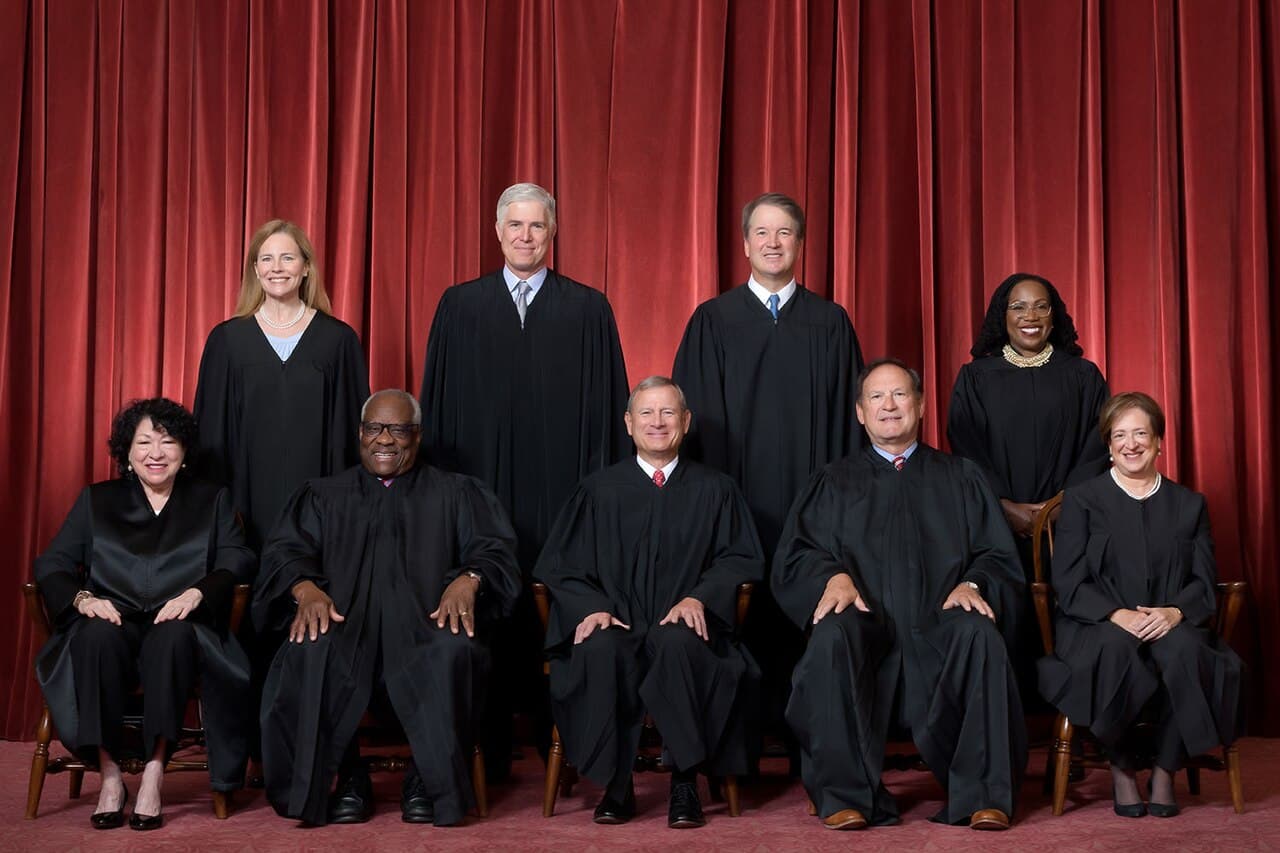
On April 29th, 2026, the United States Supreme Court issued a 6-3 ruling in Louisiana v. Callais that effectively dismantled Section 2 of the Voting Rights Act of 1965 — the legislation that civil rights leaders have long called the crown jewel of the Civil Rights Movement. This is not a procedural adjustment. This is not a technical legal clarification. This is a fundamental shift in the legal protection available to Black voters in America, and the consequences are already unfolding in real time.
If you are not sure what this ruling actually means or why it matters, this breakdown is for you.
What the Court Actually Did — In Plain Language
Here is the simplest way to understand what changed.
Imagine a teacher gives a test. Every Black student fails. Every white student passes. For 40 years, the Voting Rights Act said that what matters is the result — Black students keep failing. You did not have to prove the teacher designed the test with racist intent. You just had to show the pattern of harm.
The Supreme Court just changed that standard. Now you have to prove the teacher meant to do it.
According to the Brennan Center for Justice's analysis, the ruling reworked the 40-year-old legal standard from Thornburg v. Gingles, making three specific changes that collectively make it far harder for voters of color to win Section 2 cases — including a new requirement that plaintiffs show "present-day intentional racial discrimination," with historical evidence and ongoing disparities now counted for "much less weight."
And here is the problem with that standard: nobody writes racist intent into an email. Nobody puts it in the meeting notes. Nobody leaves a paper trail that says "we designed this voting map to dilute Black political power." They never have. The entire history of voter suppression in America is a history of neutral-sounding rules producing racially discriminatory outcomes — on purpose, but without documentation.
The new standard the Supreme Court has imposed means you can harm Black voters all day long as long as you are careful not to say why. The harm itself is no longer enough. You have to prove the intention behind it. And that proof, by design, will almost never exist.
Why Judging by Effect Rather Than Intent Has Always Been the Standard Everywhere Else
The standard the Voting Rights Act applied — harm is enough, intent is not required — is not unusual in American law. It is the norm everywhere except, now, in voting rights cases.
Workplace discrimination law holds that if a company's hiring practices screen out Black applicants at a significantly higher rate, that company can face legal liability even if no one ever said "don't hire Black people." The pattern is the proof.
Fair housing law holds that if a landlord's policies make it nearly impossible for Black families to rent, that is illegal even if no slur was ever spoken. The effect is what matters.
Basic civil liability holds that if you run a red light and hit someone, you are liable for the harm. You do not have to have intended to cause an accident.
In almost every area of American law, if something keeps hurting people, that matters. The Supreme Court has now carved out a specific exception for Black voters — the one group with the most extensively documented history of being targeted by voting restrictions that are carefully designed to produce discriminatory outcomes without using discriminatory language.
This Is a Very Old Trick in a Brand New Outfit
After the Civil War, during Reconstruction, Black men voted. They ran for office. They won seats in Congress and in state legislatures across the South. For a brief period, Black political power was real and exercised.
Then the backlash came — and it was precise.
No law was passed saying Black people cannot vote. That would have been too obvious, too legally vulnerable, too easy to challenge. Instead, voting districts were drawn in shapes that split Black neighborhoods and ensured they were always outnumbered. Polling places were moved far from Black communities. Literacy tests were required — with the quiet understanding that white voters would be waved through. Poll taxes were imposed that poor Black families could not pay.
None of those laws mentioned race. Every single one of them was designed to erase Black votes. That is the trick: neutral language, racist results. The Voting Rights Act of 1965 was written by Congress specifically to stop that trick — to say that the result matters, not just the stated reason.
In 1980, the Supreme Court tried a similar move — requiring proof of intent. Congress responded directly. In 1982, lawmakers rewrote the Voting Rights Act specifically to override that standard and restore the harm-based test. Congress fixed this once before, explicitly and deliberately. The Supreme Court has now gone around Congress and broken it again.
The Slow Dismantling Nobody Announced
This ruling did not come out of nowhere. It is the third major blow to the Voting Rights Act in roughly a decade, and each one has built on the last.
In 2013, Shelby County v. Holder eliminated preclearance — the requirement that states with documented histories of voting discrimination get federal approval before changing their voting laws. The court's reasoning was that racism in voting was essentially a thing of the past and the protection was outdated. Within 24 hours of that ruling, multiple Southern states moved to pass new voting restrictions. If racism in voting was truly over, that 24-hour response raises serious questions about what those states were waiting for.
In 2021, Brnovich v. DNC quietly raised the bar for challenging voting restrictions — making it harder to bring successful cases even when you could demonstrate that a policy harmed Black and brown voters at higher rates than white voters.
In 2026, Louisiana v. Callais gutted Section 2 itself — the last major enforcement tool still standing.
Each ruling left the law technically on the books while making it functionally weaker. Like someone slowly removing the screws from a chair one at a time — never knocking it over, just loosening it incrementally until the day you sit down and the entire thing collapses. Then they look at you on the floor and say the chair still exists.
The Concrete Damage — These Are Real Seats and Real Voices
This is not abstract. The consequences are already materializing in specific, countable ways.
At least 15 House districts — from Louisiana to North Carolina — are now at risk of elimination or redrawing in ways that dilute Black voting power. According to the League of Women Voters, Florida passed new congressional maps within hours of the Callais decision, part of a broader wave of mid-cycle redistricting across Florida, Tennessee, South Carolina, and Alabama in the weeks that followed.Texas, Missouri, North Carolina, and Ohio have redrawn maps. Republican politicians in Georgia, Mississippi, and across the South are calling for immediate special redistricting sessions.
The Congressional Black Caucus — which was born directly from the political power the Voting Rights Act made possible in 1971 — could be significantly reduced in numbers. City council seats, state legislative seats, and judicial seats where Black voters have fought for decades to achieve representation are all now more vulnerable.
When Black people lose representation in Congress, they do not just lose a politician. They lose leverage over every policy decision that affects their daily lives — healthcare funding, housing policy, criminal justice reform, education investment, and everything else that gets decided in rooms where having a voice at the table determines the outcome.
Voting rights are not a single-issue concern. They are the infrastructure on which every other issue depends.
What Black Leaders Are Saying
Senator Raphael Warnock of Georgia called the ruling a slap in the face of those who sacrificed to move the country toward its stated ideals, noting directly that without the Voting Rights Act he would not be standing in the United States Senate.
Representative Terri Sewell of Alabama said the ruling will pave the way for the greatest reduction in Black and minority voter representation since the years following Reconstruction — a period that ended in the systematic erasure of Black political power through exactly the kind of racially neutral but racially targeted mechanisms this ruling now makes harder to challenge.
This Has Never Been About Maps
The people drawing gerrymandered districts are not confused about what they are doing. The Supreme Court justices who authored this ruling are not unaware of what history shows happens when Black voting power is legally unprotected.
This is about power — specifically, about who holds it and who does not. When Black people have seats in Congress, they can block legislation that harms Black communities. They can secure funding for Black schools and neighborhoods. They can call out injustice from a platform the entire country has to hear.
Remove those seats, or make them structurally impossible to win, and you do not just change the composition of a legislative body. You remove Black voices from every table where decisions are made about Black lives. Healthcare. Housing. Policing. Education. Criminal justice. All of it.
Power does not give itself up willingly. It never has. And the decision issued on April 29, 2026 is the latest chapter in a very long effort to ensure that Black political power — even when it is legally won, even when it is constitutionally guaranteed — remains fragile, contestable, and reversible.
The Shreveport Massacre and the Gun Law Loophole That Let It Happen
Yasmin Breakdown — Because This Is Too Important for a Hot Take
The Supreme Court's dismantling of the Voting Rights Act is one of the most consequential civil rights developments in decades. It deserves more than a tweet. It deserves the historical context, the sociological analysis, and the plain-language explanation that makes it possible to understand what is actually at stake.
That is what the Yasmin Breakdown exists to deliver.
Support independent Black media that connects the dots between history and today. Join the Yasmin Breakdown on Patreon for deeper dives, extended analysis, and the conversations that give you the full picture — not just the headline.
Watch the original video on YouTube and tell us in the comments — what does this ruling mean to you personally?