iShowSpeed vs. Argentina Fans: Inside the World Cup Racism Scandal FIFA Can't Ignore
IShowSpeed was targeted with monkey gestures and 'go cry at the zoo' taunts by Argentina fans at the 2026 World Cup. Here's the full timeline, FIFA's response, and the history behind it.
Introduction
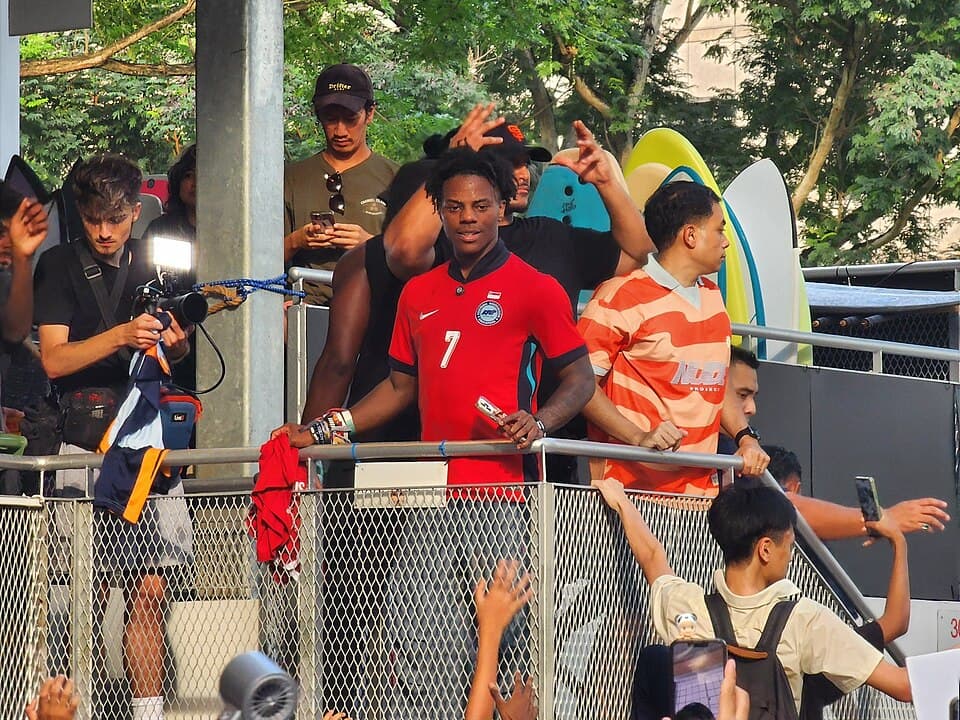
IShowSpeed has more than 50 million YouTube subscribers, a FIFA broadcast partnership, and a global fanbase that follows his every stream. None of that shielded him from racist abuse in the stands of two different U.S. stadiums during the 2026 FIFA World Cup. Twice in less than a week, Argentina fans targeted the streamer with monkey gestures and taunts telling him to "cry at the zoo." FIFA opened an investigation. The internet erupted. But the deeper story isn't just about one streamer catching heat from a rowdy crowd — it's about a pattern with roots in Argentina's own history, and a governing body whose statements keep outpacing its actions. Here's the full breakdown: what happened, what FIFA has (and hasn't) done, and why this keeps happening at the biggest stage in sports.
Timeline: Two Stadiums, Two Racist Incidents, Five Days Apart
July 3, 2026 — Hard Rock Stadium, Miami
During Argentina's 3–2 win over Cape Verde in the Round of 32, IShowSpeed was live-streaming from the stands in a Cape Verde jersey. A nearby fan in Argentina colors told him in Spanish to "go cry at the zoo," and another supporter directed a racial slur at him and told him to go home — despite the match being played on American soil.
July 7, 2026 — Mercedes-Benz Stadium, Atlanta
Four days later, during Argentina's dramatic Round of 16 comeback win over Egypt, another fan was caught on video making monkey gestures at the streamer. The fan later claimed on social media that he was simply imitating IShowSpeed rather than making a racist gesture.
Two incidents. Two cities. Same jersey in the crowd.
FIFA's Response: Strong Words, Open Questions
FIFA didn't stay silent. The organization said it strongly condemns racism, hate, and discrimination in all forms, adding that such actions have no place in football, at the World Cup, or anywhere in society. According to Al Jazeera's reporting, FIFA confirmed it launched a formal investigation into the July 3 incident almost immediately after being made aware of it.
Statements are one thing. Consequences are another. As of this writing, no fan has been publicly named or banned in connection with either incident — and that gap between condemnation and accountability is exactly what's fueling public frustration.
The Messi Silence
Lionel Messi has not personally addressed either incident. This isn't the first time his silence on racism involving Argentina's fanbase has been noted. After Argentina's 2024 Copa América win, video surfaced of players singing a chant with racist language aimed at French players of African descent. Enzo Fernández apologized on his own for participating, but Messi never issued a personal statement then either. Worth noting: widely circulated social posts claiming Messi condemned the iShowSpeed incidents directly are not accurate — no such statement exists.
Why Racists Keep Calling The Obamas Apes
"Go Cry at the Zoo": The History Behind the Slur
Comparing Black people to animals is one of the oldest tools in the white supremacist playbook, historically used to dehumanize and justify enslavement and violence. It's the same trope this outlet has covered before in connection with racist ape imagery directed at Barack and Michelle Obama. This isn't a one-off insult — it's a recurring script. [Internal link: The Ape Imagery Trope — Obama Coverage]
And IShowSpeed wasn't the only Black public figure targeted during this World Cup. French star Kylian Mbappé was called a "brute" and compared to a chimpanzee by a sitting Paraguayan senator, Celeste Amarilla, after France's win over Paraguay. Per CBC News, the United Nations Human Rights Office publicly described her remarks as dehumanizing, and French prosecutors opened an investigation. Same tournament. Same trope. Different country, different target.
Argentina's History of Racial Erasure
The reflex didn't come from nowhere. In 1800, Black people made up roughly a third of Argentina's population — an estimated 69,000 out of 187,000 residents. By the 2010 census, Afro-Argentines accounted for just 0.365% of the population.
That collapse wasn't accidental. It traces back to blanqueamiento — a deliberate 19th-century whitening policy driven in part by President Domingo Sarmiento, who framed European immigration as a way to replace what he called "barbarism" with civilization. The government subsidized mass European immigration specifically to dilute the country's Black and Indigenous population. Afro-Argentine men were also disproportionately sent to the front lines of the country's wars, and Black neighborhoods were segregated away from adequate infrastructure and healthcare — a factor that worsened death tolls during 19th-century cholera and yellow fever outbreaks. Eventually, the population had shrunk so severely that the government stopped counting African descendants in the national census altogether.
Argentina Dissolved Its Anti-Discrimination Agency
Here's where the history connects to the present. In 2024, President Javier Milei's government moved to permanently shut down INADI — the National Institute against Discrimination, Xenophobia, and Racism — the one federal agency built to investigate and hold accountable acts of discrimination in the country. Government officials called it wasteful and said it "served absolutely no purpose." According to Wikipedia's summary of public records, INADI was formally dissolved by presidential decree in August 2024, and human rights and LGBTQ+ organizations condemned the closure at the time.
Argentina no longer has the one federal agency built specifically to hold discrimination accountable. That context matters when fans from the same country are caught on camera making monkey gestures at a Black streamer on live television.
Misinformation Is Part of This Story Too
Not everything circulating online about this story is true. The July 3 zoo comment and the July 7 monkey gestures are real, confirmed incidents that FIFA has acknowledged. But claims that fans were "banned for life" or that Messi issued a personal statement condemning the fans are not backed up by any verifiable source. Treat viral screenshots with the same scrutiny you'd apply to any other unsourced claim.
The Bigger Picture
This story isn't really about one streamer getting heckled. It's about a country that spent a century and a half building its national identity around erasing its Black population, dismantled the one agency built to hold that legacy accountable, and is now facing global scrutiny after that same sentiment showed up in the stands with the entire world watching. FIFA's statements are a start. What comes next — real consequences, real bans, real follow-through — is the part that's still an open question.
For the full video breakdown and more analysis like this, join the Yasmin Breakdown family on Patreon and subscribe on YouTube.