Daphne Joy vs. Megan Thee Stallion: The Double Standard That Reveals Exactly How America Treats Black Women
Daphne Joy's breezy Cam Newton interview about her sexuality drew applause. Megan Thee Stallion's breakup drew slut-shaming and public dragging. Same topic, completely different treatment. Here's the sociology behind why.
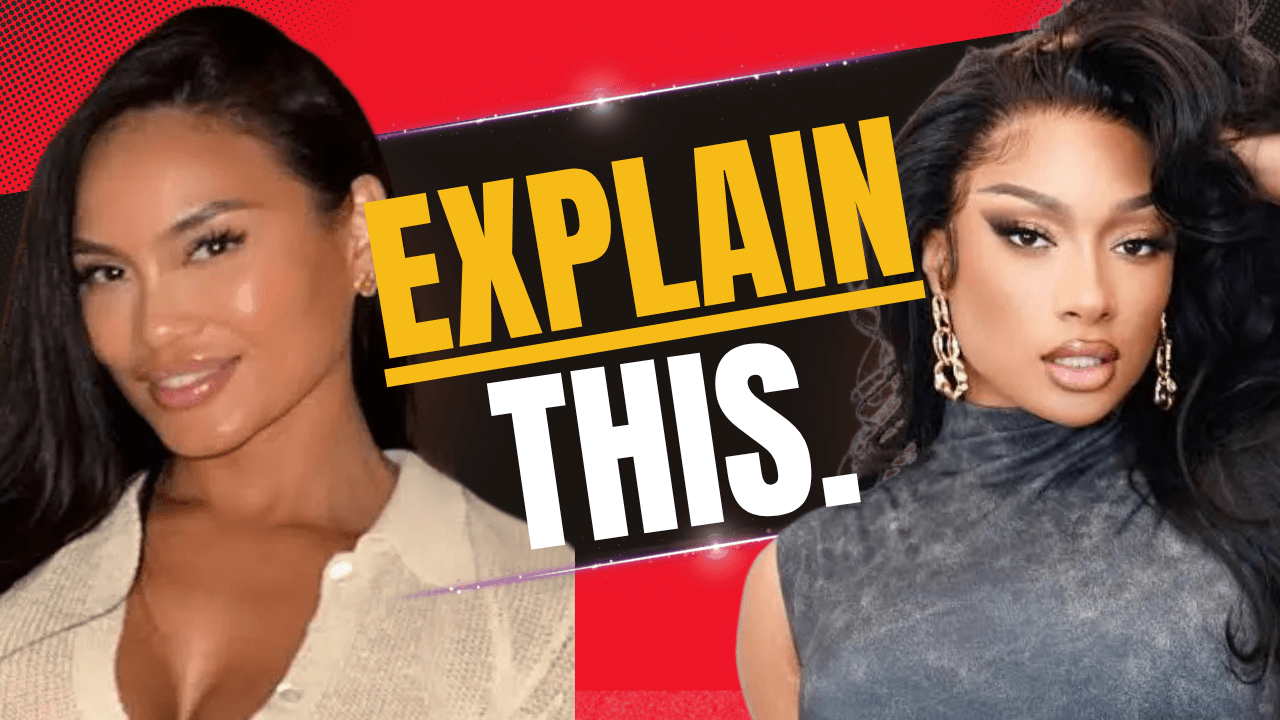
Two women. Both public figures. Both connected to high-profile men. Both existing in a media landscape that has plenty to say about women's sexuality. And yet the way the internet, the media, and specifically Black male commentators responded to each of them could not be more different.
Daphne Joy sat down with Cam Newton on his Funky Friday podcast and spoke openly and confidently about her sensuality, her identity as a sexual being, and her unbothered response to a deeply personal and non-consensual exposure. The response from Newton and much of the internet? Admiration. Enthusiasm. Applause.
Megan Thee Stallion's relationship ended, her ex allegedly cheated, and the internet — particularly Black men — dragged her through the dirt.
Same energy. Completely different reception. And the variable is race. This is misogynoir in real time, and it deserves to be named.
What Happened in the Daphne Joy Interview
On June 19, 2026, model and actress Daphne Joy appeared on former NFL quarterback Cam Newton's Funky Friday podcast following weeks of public scrutiny after an explicit video involving her leaked online — the result of what Joy describes as a failed extortion plot.
During the interview, Joy spoke confidently about her sensuality, her femininity, and her refusal to be ashamed of her sexuality. She joked about the situation. She was relaxed, charming, and entirely unbothered. Newton matched her energy throughout — enthusiastic, complimentary, and openly entertained.
According to HotNewHipHop, Joy told Newton "business has been good" following the tape leak, and Newton asked playfully about her DM volume, to which she responded confidently. The overall tone of the interview was lighthearted. Joy was treated as someone owning her story. Newton treated her with warmth and admiration.
This is a woman navigating a genuinely difficult situation — the non-consensual distribution of intimate footage is a serious violation regardless of the circumstances that produced it. Joy's confidence and her ability to find lightness in a dark moment is understandable and human. This is not a criticism of Daphne Joy.
This is a question about who gets to respond that way publicly — and who doesn't.
Now Compare That to What Happened to Megan Thee Stallion
When Megan Thee Stallion and Klay Thompson broke up — when she posted that she had been cheated on in a monogamous relationship — the response was not warmth. It was not admiration. It was not applause.
It was a coordinated, sustained, and vicious public dragging.
Comedian Lil Duval posted that Klay was "a real one" for cheating. The post received nearly two million likes. Graphics were circulated depicting Megan in degrading ways. Her rap lyrics were used as evidence of her unworthiness. Her alleged dating history was treated as a disqualification from being loved, respected, or taken seriously by a wealthy man.
The core message from a significant portion of Black male social media was simple: Megan Thee Stallion — a college-educated business owner who was the wronged party in a relationship — did not deserve loyalty, respect, or defense.
Now ask yourself: what is the actual difference between these two situations? And why does the race of the woman involved change the entire tenor of the response?
Why Black Men Are Celebrating Klay Thompson After the Meg Thee Stallion Breakup
The term misogynoir was coined by scholar Moya Bailey to describe the specific intersection of anti-Blackness and misogyny directed at Black women. It is not simply sexism. It is sexism compounded by racial hatred — a specific form of contempt reserved for Black women that does not apply to women of other racial backgrounds navigating the same circumstances.
The Daphne Joy and Megan Thee Stallion contrast is a textbook illustration.
Daphne Joy is half Filipino and half Puerto Rican. She is not a Black woman. And in the aftermath of a deeply public and personal exposure, she is able to sit on a major platform, speak openly about her sexuality, laugh about the situation, and receive enthusiastic male approval — including from a prominent Black male media figure.
Megan Thee Stallion is a Black woman. In the aftermath of being publicly cheated on, she received contempt, shame, and a coordinated effort to establish that she was unworthy of the basic dignity of a loyal relationship.
The difference is not their behavior. The difference is not their choices. The difference is not their character.
The difference is race.
The Montana Fishburne Parallel — This Pattern Has a History
This is not the first time this dynamic has played out publicly. The case of Montana Fishburne — daughter of actor Laurence Fishburne — is instructive.
When Montana Fishburne's private footage became public years ago, there was no Cam Newton energy. There was no jovial, admiring interview circuit. There was no "just own it" cultural moment. There was public humiliation, body shaming, and sustained mockery that followed her for years.
Montana Fishburne is a Black woman.
The contrast is not subtle. The same type of situation — intimate footage becoming public without the woman's consent or in circumstances the woman did not fully control — produces entirely different cultural responses depending on the racial identity of the woman at the center of it.
When it's a Black woman, the response is: you are ruined. You are less than. You are a cautionary tale.
When it's not a Black woman, the response is: you are liberated. You are owning it. You are fascinating.
This is the double standard in concrete, documented form. And it is not new. It is the same pattern that followed Serena Williams when she was caricatured in Australian media, the same pattern that followed Gabby Douglas when she smiled wrong at the Olympics, the same pattern that followed Naomi Osaka when she struggled with her mental health.
Black women in the public eye are held to a standard that does not apply to anyone else — and when they fail to meet it, the punishment is designed to permanently diminish them.
The "Just Own It" Exemption — Who Gets to Be Sexually Free
In the interview, Daphne Joy articulated a philosophy of sexual freedom and self-ownership. She said she sees no reason to be ashamed of her sensuality. She said women should just own who they are.
This is a beautiful sentiment. It is also a sentiment that is simply not available to Black women in the same cultural space.
A Black woman who has been connected to high-profile relationships, who speaks openly about her sexuality, who refuses to be ashamed of her intimate life — does not get a lighthearted podcast interview where the host is enthusiastically complimentary. She gets Twitter threads cataloguing every person she has allegedly been with. She gets memes. She gets told she is unworthy of love.
The "just own it" philosophy requires a cultural environment that is willing to let you own it. Black women do not live in that environment. They live in an environment where owning their sexuality is treated as confirmation of every negative stereotype that has been applied to Black women since slavery — the Jezebel, the hypersexual, the unworthy. The same confidence that reads as liberation in one woman reads as evidence of unworthiness in another — and the variable is always race.
This is not about telling any woman how to behave. It is about naming the system that treats identical behavior with categorically different consequences depending on who is doing it.
What This Reveals About Who Gets to Be Seen as Fully Human
Complex reported on the lighthearted dynamic between Daphne Joy and Cam Newton throughout the interview — a tone of warmth, humor, and mutual admiration that defined the entire media moment around her appearance.
Compare that to the media ecosystem that surrounded Megan Thee Stallion during her breakup — where the dominant tone from a significant portion of the Black male commentariat was contempt, mockery, and the systematic dismantling of her worthiness as a human being.
Both women deserved compassion. Both women were navigating public moments that intersected with their private lives in ways neither fully controlled. Both women were dealing with the consequences of the decisions of men in their lives.
Only one of them received warmth.
That disparity is not accidental. It reflects a deep, culturally embedded hierarchy in which Black women's full humanity — their right to joy, to dignity, to be seen as complex and worthy of protection and admiration — is perpetually conditional in ways that other women's humanity simply is not.
Megan Thee Stallion owns a college degree, a Popeyes franchise, multiple businesses, and real estate investments. None of that protected her from a public dragging rooted in the premise that her sexual history made her unworthy of a faithful partner.
Daphne Joy came onto a major podcast in the aftermath of a significant public exposure and received what amounted to a standing ovation.
The difference between those two women's experiences is not their character. It is the color of their skin. And until that asymmetry gets named directly and consistently, it will keep producing the same results.
This Is Why We Have to Keep Talking About It
This is not a comfortable conversation. It is not supposed to be. The entire point of misogynoir is that it operates on assumptions so deeply embedded in culture that many people — including many Black men — do not recognize it as a pattern. They experience it as individual responses to individual situations. They do not see the through line.
But the through line is there. It runs from Daphne Joy's Funky Friday interview to the comment sections on Megan Thee Stallion's Instagram. It runs from Montana Fishburne to Serena Williams to Gabby Douglas to Naomi Osaka. Black women who exist publicly in their full humanity — who are sexual, who have opinions, who have feelings, who make choices — are punished for it in ways that simply do not apply to other women.
Naming that pattern is not victim culture. It is sociology. And the data is in plain sight.
Yasmin Breakdown — Because Black Women Deserve Analysis, Not Just Apologies
Yasmin Breakdown exists to name these patterns clearly, connect them to their historical and sociological roots, and give Black women the cultural analysis that validates what they are already experiencing with their own eyes.
Support independent Black media that centers Black women's full humanity. Join the Yasmin Breakdown on Patreon for deeper dives, extended breakdowns, and the conversations the rest of the internet won't have.
Watch the original video on YouTube and tell us in the comments — do you see this double standard in your own life?