Angel Reese Makes WNBA History With 1,000 Rebounds: But the Flagrant Foul Call Raises Serious Questions
Angel Reese became the fastest player in WNBA history to reach 1,000 rebounds during Atlanta Dream's 113-96 win over Indiana Fever. But a controversial flagrant foul call is raising real questions about whether the WNBA is treating her fairly.

Angel Reese just made WNBA history. But instead of letting the milestone breathe, the conversation is already being pulled toward a controversial officiating call that raises questions every serious WNBA fan needs to be asking right now. This is not just a sports story. It is a story about a young Black woman who keeps delivering record-breaking results while fighting for the basic respect those results deserve.
The Win First: Atlanta Dream 113, Indiana Fever 96
Let's start with the facts on the court. The Atlanta Dream defeated the Indiana Fever 113-96 at a sold-out State Farm Arena in Atlanta — a back-to-back sweep of Indiana in three days. The Dream improved to 11-4 on the season, one of the strongest starts in franchise history.
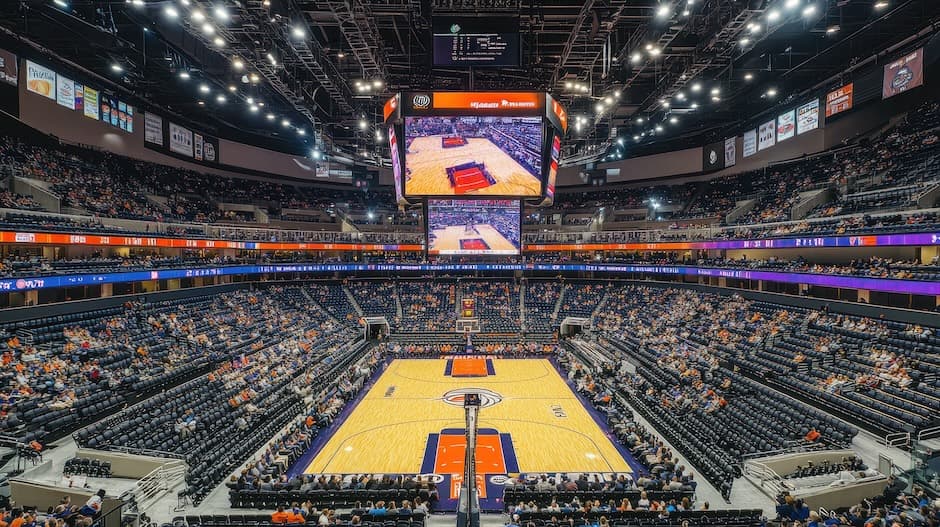
Rhyne Howard led the Dream with 24 points, Allisha Gray added 22, and the victory was earned in front of a sold-out crowd of 17,044 at State Farm Arena, home of the NBA's Atlanta Hawks. Angel Reese finished with 18 points and 8 rebounds — solid contributions on a night when the milestone she reached overshadowed everything else.
Angel Reese Just Broke a WNBA Record That Stood for Over a Decade
Here is what the history books now say: Angel Reese became the fastest player in WNBA history to reach 1,000 career rebounds during the Dream's 113-96 win over the Indiana Fever at State Farm Arena, reaching the milestone in her 79th WNBA game.
Reese got there in 79 career games, breaking the previous record held by Tina Charles, who needed 89 games to reach the same mark. Charles is one of the league's great frontcourt rebounders, so Reese did not simply edge past a light benchmark — she moved ahead of a genuine WNBA standard.
And this milestone did not come out of nowhere. According to EssentiallySports, Reese has also been the fastest player in league history to reach 500, 600, 750, and 900 career rebounds. She has been on a record-breaking pace since the moment she entered the league. The 1,000-rebound mark is not a surprise — it is a checkpoint on a trajectory that keeps going.
Is 2026 WNBA All-Star Voting Rigged? 7 Things You Need to Know
Reese herself put it plainly in her postgame press conference: "I think people don't realize rebounding is harder than you think. Defensive rebounds are a little bit more easier, but going in and crashing every single time to get second-chance opportunities on the offensive end — you can look statistically, they're not just from my shots, they're from my teammates. It gives us more points, it gives us more opportunities."
That is exactly what Dennis Rodman built his Hall of Fame career on. Rebounding is an unglamorous, physically punishing job that most players avoid — and Angel Reese has made it her signature. The record reflects that.
The Sold-Out State Farm Arena Moment
For every person who has spent the past two years saying the Atlanta Dream can't sell out a high school gym — the receipts are in.
The Dream earned their third straight win in front of a sold-out crowd of 17,044 at State Farm Arena. Celebrities, athletes, and Atlanta's broader cultural community showed up for this game. Reese acknowledged the energy in the building postgame, saying: "Everybody comes out and really supports. We had some of the guys from the Hawks here. We had Latto here tonight. We had a lot of people here tonight, and this shows Atlanta's big. Everybody loves being in 'The A.'"
The narrative that Angel Reese doesn't draw crowds does not survive contact with reality. State Farm Arena seats over 17,000 people. It was full. The conversation should end there.
Now the Part That Demands Attention: The Flagrant Foul Call
In the middle of a historic performance, something happened that cannot be ignored.
The incident occurred during a rebound battle with Indiana Fever forward Damiris Dantas. Officials initially whistled Reese for a common foul, but the play was sent to replay review. After taking a closer look, referees upgraded the call to a Flagrant 1 foul after determining contact was made to Dantas' neck and throat area.
When you watch the play, it does not look intentional. It does not look unnecessary. Reese was going for the ball the way she goes for the ball every single possession — aggressively, physically, relentlessly. That is her game. That is why she has 1,000 rebounds faster than anyone in WNBA history.
But here is why this call matters beyond one play. Under the WNBA's updated disciplinary structure for 2026, players accumulate points for flagrant fouls throughout the season, with an automatic one-game suspension upon reaching four flagrant points. It is Reese's second flagrant foul of the season, meaning she is expected to receive a $500 fine — and is now two flagrant points away from an automatic suspension.
The flagrant foul point system is a mechanism that can be used to remove a player from games — and if the calls are being applied inconsistently, that inconsistency becomes a pattern worth examining.
The Bigger Question: Are the Referees Treating Angel Reese Fairly?
This question is not paranoia. It is pattern recognition.
Fans have raised concerns that Clark got away with arguing with the referees in the same game, while Reese was hit with a technical foul for waving her hands near a referee. One fan wrote: "It will always amaze me how she's allowed to talk to the refs like this — anyone else attempts this and they're ejected."
And this is not an isolated community concern. ESPN reported that WNBA officiating has become one of the biggest storylines of the 2026 season, with players and coaches across the league — including veterans like Natasha Cloud and Kelsey Plum, plus coaches like Becky Hammon — voicing frustration about inconsistency in how games are called.
The WNBA Is Cooked: 10 Stories That Prove the League Has a Officiating Problem
The WNBA introduced a task force this season specifically to monitor contact. That task force, combined with an upgraded flagrant foul points system with steeper financial penalties, creates a structure where a physical player like Reese faces consequences that accumulate quickly — whether or not each individual call is warranted.
If those calls are being applied with a heavier hand against Reese than against other players playing with similar physicality, that is something the league needs to answer for publicly. Not eventually. Now.
What Angel Reese Teaches Us About Showing Up Anyway
Beyond the box score and beyond the officiating debate, there is something in Angel Reese's approach to all of this that deserves to be named directly.
She has been criticized relentlessly since college. Her layup percentage was dissected. Her personality was weaponized. Her achievements were minimized. And through all of it, she kept going. She kept crashing the boards. She kept showing up in a new city, on a new team, and building on every foundation she had already established.
The people who said she couldn't are watching her break records at 23 years old. The people who said Atlanta couldn't sell out an arena watched 17,000 people fill State Farm Arena to celebrate her milestone.
She said it herself in the postgame: "I think a lot of times I'm really hard on myself. About how well I want to be and how great I want to be. But just taking my time and just knowing that I've done some great things and just patting myself on the back and just knowing that I want more."
That is the mindset. That is why she holds the record.
The Bottom Line: Celebrate the Record, Watch the Referees
Angel Reese is the fastest player in WNBA history to reach 1,000 rebounds. The Atlanta Dream swept the Indiana Fever back-to-back. State Farm Arena sold out. These are the facts, and they deserve to be celebrated without qualification.
But keeping a close eye on how the WNBA's officiating system is being applied to Angel Reese is not optional for anyone who takes the league seriously. The flagrant foul points system, applied inconsistently to a physical player in a league that is supposedly promoting more physical play, can become a tool that removes one of the game's most impactful players from the court — one call at a time.
Watch the calls. Track the pattern. And in the meantime, argue with your mama about whether Angel Reese belongs in the conversation with the greatest rebounders in WNBA history. The record says she does.
Get the Full Breakdown Every Week — Join the Yasmin Breakdown on Patreon
Yasmin Breakdown covers WNBA, Black women in sports, and the cultural and sociological forces that shape how these athletes are received — on the court and off it.
Support independent analysis that centers Black women in sports. Join the Yasmin Breakdown on Patreon for deeper dives, extended breakdowns, and the conversations mainstream sports media won't have.
Watch the original video on YouTube and tell us in the comments — did that flagrant foul call look justified to you?